The Role of Urea in Increasing Agricultural Commodity Production in 2026
The Role of Urea in Increasing Agricultural Commodity Production in 2026
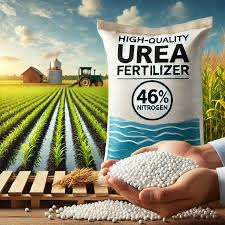
Urea remains the world’s most widely consumed nitrogen fertilizer, accounting for more than 55% of total nitrogen fertilizer consumption. In 2026, while global urea prices have faced sharp fluctuations due to geopolitical disruptions and supply chain constraints, the role of this vital fertilizer in ensuring food security and increasing crop production has received greater attention than ever.
Urea: The Backbone of Agricultural Production in 2026
Global urea demand in 2026 is estimated at 195 to 197 million tons, representing about 2% growth compared with the previous year. This growth is driven by the expansion of cereal cultivation area worldwide, as farmers depend on nitrogen fertilizers to meet the goal of increasing food production by 28% by 2030.
More than 70% of the urea produced worldwide is allocated to the agricultural sector, and high-yield cereal programs in India, China, and parts of Africa absorb huge volumes of granular urea. In India, the annual subsidy regime of ₹2.5–3.0 lakh crore keeps the retail price of urea artificially low and sustains consumption of 32 to 34 million tons in the country.
Mechanisms of Yield Increase with Urea in 2026
Controlled-Release Urea (CRU) and Coated Urea
The most important technological development in 2026 is the expansion of controlled-release and coated urea, which solves the main problem of ordinary urea: rapid nitrogen release and high losses. Nitrogen use efficiency (NUE) in ordinary urea is usually between 30% and 35%, while this figure increases significantly in new formulations.
Key results from 2026 field studies:
Type of Urea Crop Yield Increase vs. Ordinary Urea Nitrogen Efficiency Improvement
Controlled-Release Urea (CRU) Rice 13.1% (first season) and 15.5% (second season) 13.2–15.5% increase in productivity
Biochar-Coated Urea Wheat 36.2% 51.0% (more than double)
Controlled-Release Urea Maize 18.3–22.8% Reduction in nitrogen losses
Chitosan/Diatomite-Coated Urea Rice (saline soil) 8.95 t/ha 62.8%
A 13-year study (2012–2024) in China showed that controlled-release urea not only significantly increases rice yield but also improves soil organic carbon by 54.9% and total soil nitrogen by 53.8%, while reducing nitrogen surplus by 24.8% to 38.9%.
In wheat, the use of controlled-release urea led to yield increases of 8.51% in 2023 and 14.3% in 2024. Combining 80% controlled-release urea with 20% ordinary urea resulted in yield increases of 19.2% to 23.3%.
Nano-Urea: An Emerging Technology
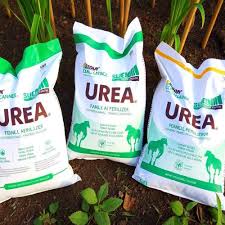
Nano-urea has gained special prominence as a complementary solution in 2026. Studies show that foliar application of nano-urea along with the recommended basal dose of conventional fertilizers can maintain comparable yield to the traditional method while reducing urea consumption by 25% to 50%. In peach cultivation, using 75% of the recommended nitrogen dose together with nano-urea increased fruit yield by 19.35%.
In rice, studies show that combining nano-urea with 66% to 75% of the recommended nitrogen dose can save 27 to 40 kg of nitrogen per hectare in areas such as Varanasi without reducing yield.
Precision Application and Smart Agriculture
In 2026, precision agriculture technologies play a key role in optimizing urea use. Microcontroller-based variable rate systems for liquid urea application in wheat have made possible a 46.68% reduction in nitrogen input while maintaining grain yield comparable to conventional fertilization. In addition, hyperspectral satellite imagery allows farmers to apply nitrogen with unprecedented precision and manage rising fertilizer costs.
Impact on the Production of Strategic Crops
Rice
Rice, as the staple food of more than half of the world’s population, provides 65% of daily calories in many Asian countries. In 2026, controlled-release urea in double rice cropping systems has increased yield by 13.1% in the first season and 15.5% in the second season.
In saline and alkaline soils, which affect about 20% of the world’s irrigated land, controlled-release urea with chitosan/diatomite coating has achieved a yield of 8.95 tons per hectare and nitrogen efficiency of 62.81%.
Maize
Maize, as one of the world’s three main cereals, has experienced yield increases of 18.3% to 22.8% in 2026 through the use of controlled-release urea. Combining straw mulch with controlled-release urea has also improved maize yield by 8.36% to 21.06% while reducing gaseous nitrogen losses.
Wheat
In wheat, biochar-coated urea has delivered a yield increase of 36.2% and nitrogen use efficiency of 51%. In addition, granular nitrogen sources have shown 17% higher grain yield in no-till winter wheat compared with liquid sources.
Food Security and Support Policies in 2026
The role of urea in global food security has become more evident than ever in 2026. Modeling by the International Chamber of Commerce (ICC) shows that in critical scenarios of rising costs, a 37% reduction in nitrogen fertilizer consumption could lead to a 10% drop in cereal productivity within one year. Between April and June 2026, about 3.7 million tons of urea demand was postponed or lost, as farmers and importers deferred their purchases.
In response to this crisis, governments have adopted multiple support policies. Indonesia reduced the prices of subsidized fertilizers, including urea, by 20% to maintain national food production. India is also drafting a new urea investment policy to fill a 10-million-ton supply gap and reduce import dependence by 25%.
Environmental Challenges and Sustainable Solutions
Alongside the vital role of urea in increasing production, its environmental challenges have also received serious attention in 2026. Research published in the journal Nature Water shows that widespread urea application in the Canadian prairies can severely degrade water quality and drive algal growth to levels 10 times higher than other damaged ecosystems.
However, new controlled-release and coated urea formulations offer an effective solution to this challenge. Life cycle assessment (LCA) confirms that biochar-coated urea brings reductions in environmental impacts across multiple categories while enhancing sustainable cereal production. In addition, polyurethane-coated controlled-release urea in citrus orchards has significantly reduced nitrogen losses while increasing production.
Conclusion
Urea in 2026 remains recognized as the main driver of agricultural production worldwide. Despite severe price volatility and supply chain challenges caused by geopolitical tensions, innovative formulations such as controlled-release urea, coated urea, and nano-urea have made possible yield increases of 13% to 36% in strategic crops such as rice, wheat, and maize. These technologies not only improve agricultural productivity but also, by reducing nitrogen losses and improving soil health, pave the way for the sustainable intensification of agriculture. Investment in research and development of more efficient formulations, expansion of precision agriculture, and adoption of smart support policies will be key to ensuring global food security in the years ahead.
For more info call us in
Nonadshop.com
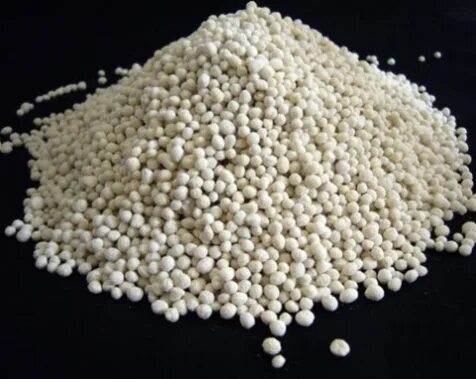
Parvisico.com